

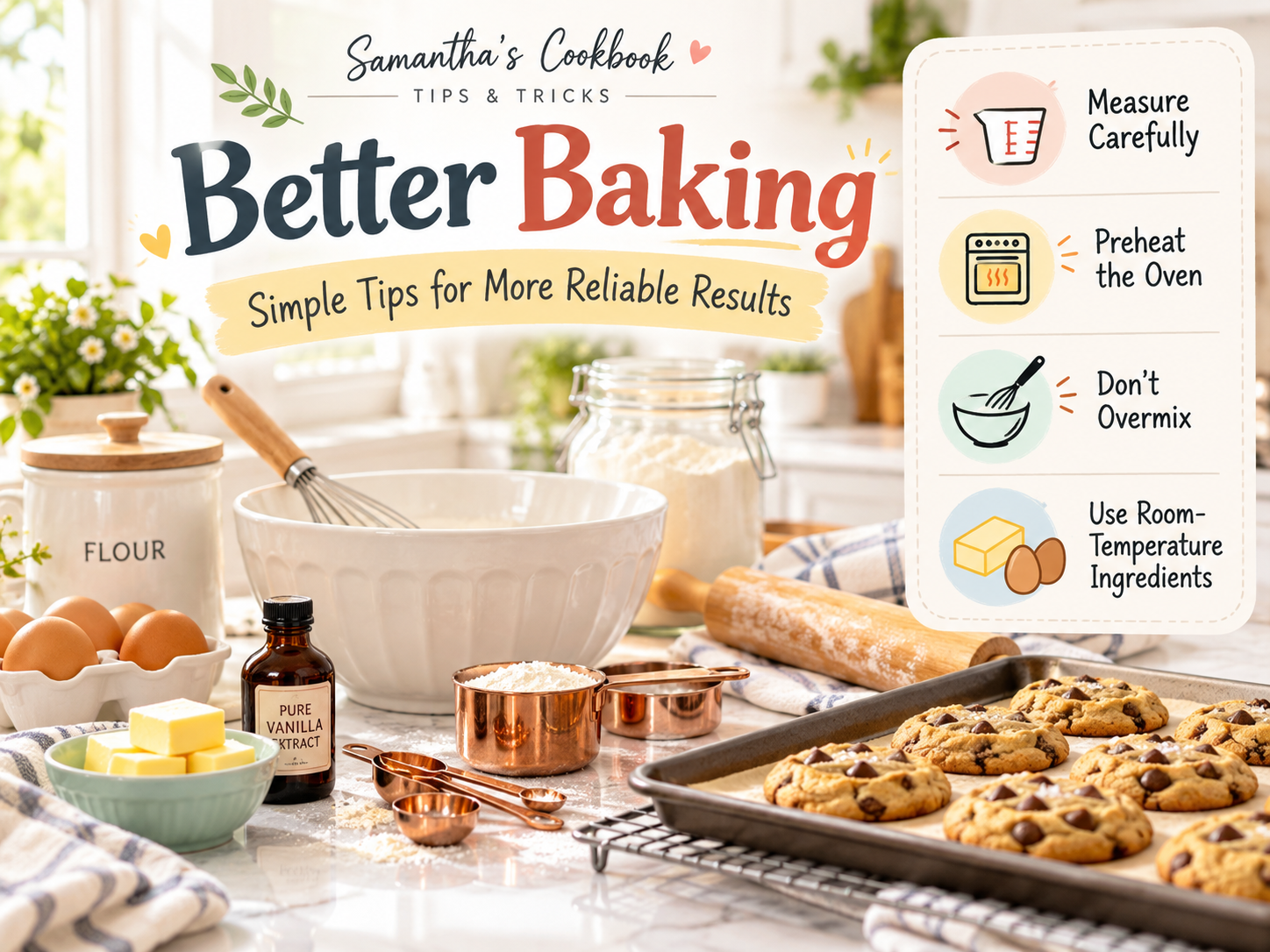
Better Baking: Simple Tips for More Reliable Results
Baking can be a little less forgiving than ordinary cooking because small changes in measurements, temperature, or technique can affect the final result. A few simple habits can make cakes, cookies, breads, and other baked goods much more consistent.
Measure Ingredients Carefully
Baking depends on accurate proportions. For flour, spoon it lightly into the measuring cup and level the top rather than scooping directly from the bag, which can pack in too much flour.
For brown sugar, recipes usually expect it to be packed firmly into the measuring cup unless stated otherwise.
Preheat the Oven
Give your oven enough time to fully reach the required temperature before putting food inside. Starting in an oven that is still warming can affect rising, texture, and cooking time.
An inexpensive oven thermometer can also help if you suspect your oven runs hotter or cooler than the temperature shown on the dial.
Use Room-Temperature Ingredients When Called For
Butter, eggs, milk, and other refrigerated ingredients often combine more smoothly when they are allowed to come closer to room temperature first.
This is especially useful for cakes and cookies because the ingredients blend more evenly and can produce a better texture.
Don't Overmix
Once flour is added to cake, muffin, pancake, or quick-bread batter, mix only until the ingredients are combined unless the recipe tells you otherwise.
Too much mixing can develop the gluten in the flour and make baked goods tougher rather than tender.
Check Your Baking Soda and Baking Powder
Leavening ingredients lose strength over time.
To test baking powder, place a small amount in hot water. It should bubble vigorously.
To test baking soda, add a little vinegar or lemon juice. It should fizz immediately.
If there is little or no reaction, replacing it may save an entire batch of baking.
Avoid Opening the Oven Too Often
Every time the oven door opens, heat escapes. Cakes and other delicate baked goods can even fall if the temperature suddenly drops during an important part of the baking process.
Use the oven window when possible and wait until close to the expected baking time before checking.
Know When It's Done
Different baked goods require different tests.
For cakes and quick breads, a toothpick inserted near the center should generally come out clean or with only a few moist crumbs.
Cookies often continue cooking for a short time after leaving the oven, so they may be ready when the edges are set even though the centers still look slightly soft.
Let Baked Goods Cool Properly
Allow cakes and breads to cool for the amount of time recommended before removing them from their pans.
Cookies usually benefit from resting on the baking sheet for a few minutes before being transferred to a cooling rack.
Samantha's Cookbook Tip
Write down any change you make to a baking recipe. If you reduced the sugar, changed the pan size, baked it five minutes longer, or substituted an ingredient, a quick note makes it much easier to repeat a successful batch.