Keep Food Fresh Longer: Simple Food Storage Tips
Knowing how to store food properly can help it stay fresh longer, reduce waste, and save money. A few simple habits can make a surprisingly big difference.
Refrigerator Tips
Keep your refrigerator at about 40°F or below. Store milk, eggs, and other highly perishable foods toward the interior of the refrigerator rather than in the door, where temperatures change more often.
Keep raw meat, poultry, and seafood on the lowest shelf, preferably in a container or tray, so any accidental leaks cannot drip onto other foods.
Most cooked leftovers should be refrigerated within about two hours and stored in covered containers.
Fruit and Vegetable Storage
Not everything belongs in the refrigerator. Potatoes, onions, and garlic generally do best in a cool, dry, dark place with some air circulation.
Many fruits produce ethylene gas as they ripen. Apples, bananas, avocados, peaches, and tomatoes can cause nearby produce to ripen more quickly. Keeping particularly sensitive produce separate can help it last longer.
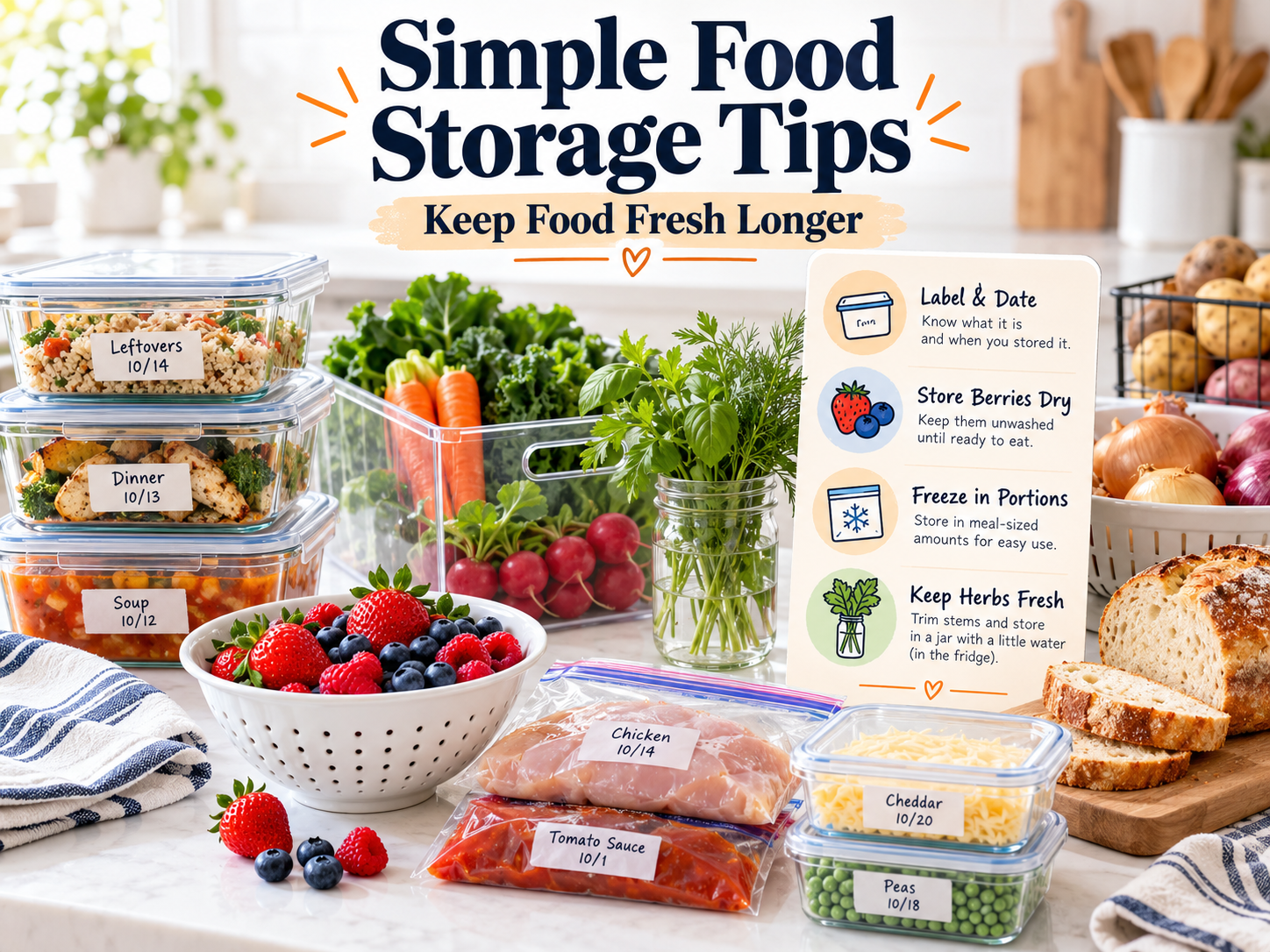
Fresh berries usually keep better when they are stored dry and washed just before eating rather than before refrigeration.
Fresh Herbs
Treat soft herbs such as parsley and cilantro somewhat like flowers. Trim the stems and stand them in a small amount of water in the refrigerator. A loose covering can help prevent them from drying out.
Basil generally prefers room temperature and can also be kept with its stems in water.
Bread
If bread will be eaten within a few days, keep it tightly wrapped at room temperature. Refrigeration can make bread go stale faster.
For longer storage, freeze bread. Slices can be removed individually and toasted or thawed as needed.
Freezer Tips
Remove as much air as practical from freezer bags and containers. Air contributes to freezer burn.
Label containers with both the contents and date. That little step prevents the mystery-container problem six months later.
Freezing food in smaller portions also makes it easier to thaw only what you need.
Leftovers
Use shallow containers for hot leftovers so they cool more quickly in the refrigerator. Don't rely only on appearance or smell when deciding whether very old leftovers are safe. When you're uncertain how long something has been stored, the safer choice is to discard it.
Samantha's Cookbook Tip
A simple roll of masking tape and a permanent marker can be one of the most useful tools in the kitchen. Write the contents and date on leftovers and freezer containers before putting them away.